Wednesday, April 27, 2011

Finding Dawn

Lorraine and Dawn Crey


We will be watching the movie "Finding Dawn".  As you watch this film, I want you to consider the following issues:
  1. Systemic racism - how is the inherent racism in the justice system demonstrated in the story of Dawn Crey?
  2. How did Dawn suffer from a loss of identity and how did this affect her?
  3. What made the missing women of the downtown eastside nameless and faceless?
  4. Can you see a difference how the women on the Highway of Tears and the women of the downtown eastside are viewed?  How was the response of the community different?  Why might that be?
  5. "Women's issues are men's issues too."  How is this statement demonstrated in this film?

Read one of the following articles:
  1. Stolen Sisters
  2. Seeking Justice for Canada's 500 Missing Native Women.   
  3. Investigating Violence Against Aboriginal Women
  4. Vancouver Eastside Missing Women
  5. Racism Keeps Native Women's Killer Anonymous 

Write a response in your blog to this article.

    Tuesday, April 19, 2011

    First Nations and the Justice System

    Less than 3% of the population of Canada is Aboriginal, yet about 40% of the population of Canada’s prisons is Aboriginal.  What do you think might be the cause of this?


    Make a list of five things that you think might be factors in the over-representation of Aboriginal people in Canada's prisons.

    1.

    2.

    3.

    4.

    5.


    Notice how all these factors hold the person in a web of poor choices.  

    Traditional Aboriginal justice varied from nation to nation, however there were some common themes.  What are the common themes and the different practices in traditional Aboriginal justice?  What is the basic philosophy of Aboriginal justice compared to the Canadian justice system?


    Aboriginal people have faced a justice system that has racism embedded in it for many, many years.  Aboriginal people did not have equal rights in the law to other Canadians.  They were not allowed to hire lawyers to settle land claims.  Traditional ceremonies like the potlatch were made illegal.  On the prairies, First Nations people would have to get permission (and a card) from their Indian agent if they wanted to travel from their reserve to a different reserve. The pass-card said where the person could travel to, and how long they could stay. The Canadian government didn’t want different reserves to organize and either make demands or war against them. It was also illegal under the Indian Act for an Aboriginal person to have any alcohol. Aboriginal people who did not speak English or French were not given translators. An Aboriginal person who only spoke their traditional language could end up in court, but not understand what was being said. Obtaining a fair trial was impossible. 


    Today, the numbers of Aboriginal prisoners is a serious problem - 40% of all prisoners in federal and provincial prisons are Aboriginal. 

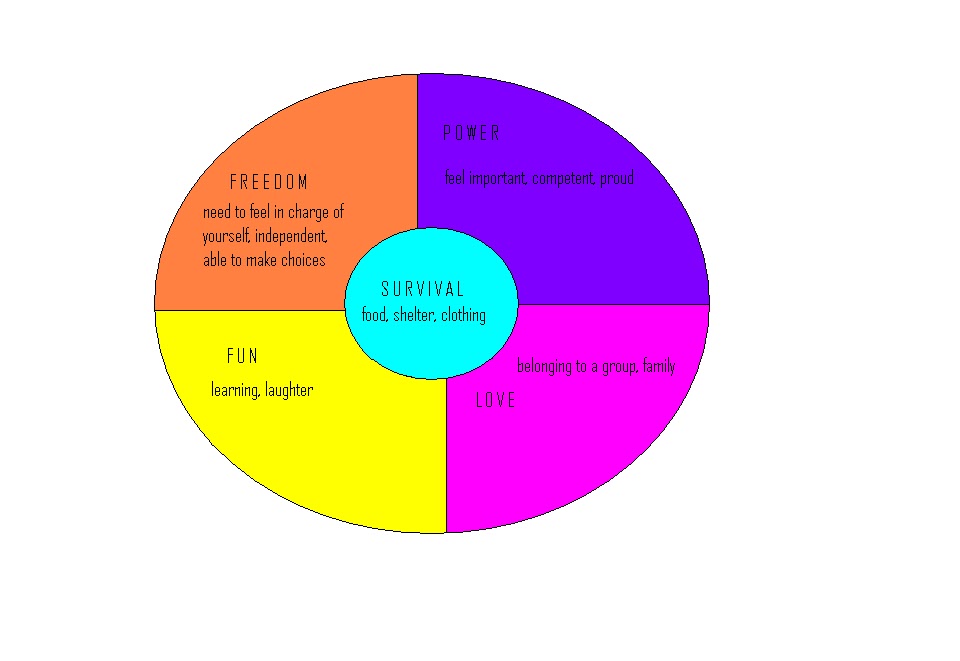
    Racism aside, many of these prisoners suffer from personal histories that have thrown them into the circle you looked at above. 

    Problems experienced as youth
    % of FN prisoners
    Parental neglect
    39.1%
    Absent parent(s)
    35.9%
    Group/foster homes
    10.9%
    Runaway
    9.4%
    Poverty
    35.9%
    Alcohol Abuse
    84.4%
    Drug use
    50%
    Learning problems
    15.6%
    Behavioural problems
    65.5%
    Emotional problems
    21.9%
    Physical abuse
    50%
    Sexual abuse
    21.9%

    Highest grade achieved
    Percentage of FN prisoners.
    Grade 6 or less
    12.5%
    Grades 7-9
    46.9%
    Grades 10-12
    37.5%
    Post graduate
    3.1%

    Vocational Skills
    Percentage of FN prisoners
    No Response
    7.8%
    Unskilled
    45.3%
    Semi-Skilled
    23.4%
    Skilled (Non-traditional skills)
    18.8%
    Craftwork/Artwork
    4.7%


    Needs of Aboriginal Inmates
    Percentage of FN Prisoners
    Substance Abuse Treatment
    88%
    Personal/Emotional Counselling
    82%
    Employment Counselling
    63%
    Education and Training
    54%


    Other causes of higher arrest rates are:

    • Police arresting without cause.
    • Police are more likely to patrol areas of cities that have a higher Aboriginal population.
    • These areas have higher poverty levels, other social problems, and  higher crime rates
    • This results in Aboriginal peoples being arrested for minor offences that would be overlooked in the white community.   Fewer non-Aboriginal people are arrested for the same offence because there are fewer police in their area.
    •  There is also evidence that police are less likely to arrest a non-Aboriginal for being drunk in a public place than an Aboriginal person.
    • There can also be different community standards for behaviour in cities and towns compared to reserves. Reserves are smaller and are more tightknit.  Behaviour that is criminal off reserve might not be considered criminal on reserve – it is seen as being part of who that person is. Being arrested in a city usually results in the accused being dealt with through the formal, legal justice system.
    Reforming Canada's Prisons:  

    In groups, discuss these questions.


    • What is the purpose of prison?
    • Is it to punish the offender, or is it to rehabilitate the offender?
    • Is prison always the answer to criminal activity? 
    • Is the incarceration of offenders always the best option?


    Sentencing Circles: Sentencing circles are one way that the prison system is trying to make things better for Aboriginal offenders.


    In a sentencing circle, the aboriginal community decides a person’s punishment. Also the offender is expected to make amends not just to their victim but to the community. This is called restorative justice.


    Restorative justice doesn't work for everyone or every situation.  In a group, create a list of criteria that an offender would have to meet before they can take part in restorative justice.


    …the [current] system is right now just a punishing system…They’re not looking at what’s causing these problems, they’re looking at, hey, we have to punish this guy for what he’s done…a lot of these guys go to jail, and they sit around this ten-by-twelve cell…And they get very bitter. …Here in a sentencing circle, we make sure somebody tells the offender that we’re here to help, for support…if recommendations are made that he takes some kind of programming to better himself back in society, he’s not only promising the magistrate or probation officer, he’s promising it to his own community.

    Restorative justice and sentencing circles can allow offenders to begin to heal.

    Criticisms of Sentencing Circles:


    What do you think might be some of the criticisms of sentencing circles?


    How do you think this fits into the concept of social justice?

    Sunday, April 17, 2011

    Indigenous Peoples - Comparison

    Create a Venn diagram looking at the history of the First Nations people, the Australian Aborigines, and the Ainu and their contact with colonists/settlers/late-comers.  Your Venn diagram should look something like this:


    When you are finished your Venn diagram, you will write a composition comparing the experiences of each group as well as the indigenous people you researched for your poster.  After you compare them, write another paragraph expressing why you think there are so many similarities in the treatment of tribal people by the colonists/settlers/late-comers.  Hint:  I want you to think about power. 

    Friday, April 8, 2011

    Indigenous People's Experience

    Around the world there are indigenous people -  tribal people who are defined by familial descent and/or ethnic origin. organized by family, lineage, or clan.  Most tribes are also organized as  political entities, within which people share a common language and culture. Some tribes are spread across large territories, and individual members may never meet or know all of the others. Some are small groups, confined to a limited territory, sometimes a single small island, within which everyone knows everyone else very well. What unites societies of such diverse scales as being “tribal” is their own internal sense of “being a single people,” but are not generally recognized as a legally defined nation-state. Unfortunately, throughout most of written history the terms tribe and primitive were usually linked; however, in recent years it has been recognized that tribal culture, language and history is every bit as complex and rich as any other culture.  The term primitive is to be avoided as it carries with it judgment of the moral or technological development of a people.


    One tribal group that embodies this complexity are the Ainu of northern Japan.  Ainu are racially different from the Japanese and have a different language and a culture and religion based on close ties with the environment.  Their history is an oral one.  Sadly, much of the culture, history, and language has been lost, however recently there has been a renewal in interest and pride amongst the Ainu in their own culture.


    Using the reference encyclopedia on culture and information on the Internet, create a poster on 11" x 16" paper on an indigenous people from any country in the world.  Cover the following topics:
    • location
    • culture
    • language
    • history
    • interaction with colonial powers
    Include at least one visual, i.e. photograph, drawing, chart, map, etc.

    Thursday, March 17, 2011

    Japan and the Fukushima Nuclear Power Plant

    Looking at what is happening in Japan right now, we are faced with multiple and conflicting situations.  Over spring break

    http://www.heraldsun.com.au/news/world/japan-nuclear-crisis-atomic-samurai-not-afraid-to-die/story-e6frf7lf-1226023634089

    Tuesday, March 15, 2011

    Reading Assignment

    BOOK ASSIGNMENT

    Choose and read one of the books listed or one of your own choice (it must be approved by Mrs. Hayashi).

    Journal as you go - As you're reading the book, keep two-sided entries in your journal. The left side should have quotes from the book and page numbers. The right side should have your questions, thoughts, observations, revelations, etc.

    In addition, complete any two of the assignments below:
    1. Discuss in depth the relevance of the title.
    2. Write a letter to the author.
    3. Use two other sources to research and write a report on an issue from the book.
    4. Write and produce a one minute radio or television PSA on this issue
    5. Q & A - Pretend you're interviewing a person from the book. Write your interview in question and answer format.
    6. Compare and contrast the book with another you have read on a similar topic.
    7. Discuss cause and effect relationships you found in the book.
    8. Write an editorial based on a controversial issue in the book.
    9. Create a glossary of unfamiliar words and phrases.
    10. Choose your favorite passage from the book. Copy it down and discuss what you found appealing about it.
    11. Top 10 List - list ten things you learned from this book.
    12. You're the reporter. Write a front page news story or create a tv or radio report live from the scene.
    Your work will be posted on the walls outside the classroom.


    Social Justice (General)
    • Beyond cynicism: towards ethics in leadership
    • Moral courage
    • Why social justice matters

    The Law and Aboriginal Rights
    • Raven's children: aboriginal youth health in BC
    • Imaginary Indian: the image of the Indian in Canadian culture
    • Where the pavement ends
    • A Long and terrible shadow: White values and native rights in the Americas since 1492
    • The Unjust Society
    • The Marshall decision and native rights
    • Justice for Canada's Aboriginal peoples
    • Indians of North America - Tsawout Band - Land claims
    • This land is our land: the Mohawk revolt at Oka
    • Nisga'a: People of the mighty river
    • Nisga'a Final Agreement
    • Inuit and their land
    • Blood of the land: The Government and corporate war against First Nations
    • What's the deal with treaties?
    • People of the pines: The Warriors and the legacy of Oka
    • Enough is enough: aboriginal women speak out
    • Treaty talks in British Columbia
    • Native people's access to justice
    • Aboriginal issues today: a legal and business guide
    • Legacy: Indian Treaty Relationships
    • Native law
    • Spirit dance at Meziadin: Joseph Gosnell and the Nisga'a Treaty
    • Death feast in Dimlahamid


    Racism
    • Voyage of the Komagata Maru
    • Racism
    • Racism
    • Racism in Canada
    • Racial profiling in Canada
    • Neo-Nazis: A growing threat
    • Better day coming: Blacks and equality, 1890-2000
    • Civil rights: the struggle for black equality
    • Redress: inside the Japanese Canadians call for justice
    • End of apartheid in South Africa
    • Colour-coded : a legal history of racism in Canada, 1900-1950
    • Forces which shaped them
    • Black like me


    Poverty
    • In the realm of hungry ghosts
    • Street stories: 100 years of homelessness in Vancouver
    • Street people speak
    • Pathologies of power: health, human rights, and the new war on the poor 
    • War at home: an intimate portrait of Canada's poor
    • On the streets
    • Hope in the shadows
    • Race against time
    • The Blue sweater
    • The end of poverty
    • Dying for a home
    • Pay the rent or feed the kids
    • All our sisters
    • No-nonsense guide to world poverty
    • The Life you can save
    • Out of poverty: and into something more comfortable
    • The Place I call home: voices and faces of homeless teens
    • Homelessness
    • Cesar Chavez: labor leader
    • Motorcycle diaries: notes on a Latin American journey
    • Angela's ashes: a memoir of a childhood


    LGBTQ Issues
    • Sexual spectrum: exploring human diversity
    • Free your mind
    • Two teenagers in 20
    • In your face
    • Revolutionary voices
    • Gender outlaw: on men, women, and the rest of us
    • Now that I'm out, what do I do?
    • Outing yourself
    • Becoming two-spirit
    • Hear me out
    • GLBTQ*
    • Is it a choice?
    • Civil wars: the battle for gay marriage
    • Just a Mom
    • Love makes a family
    • 50 ways to support lesbian and gay equality
    • She's not there: a life in two genders


    Women and Gender Issues
    • Stolen innocence
    • Under the banner of heaven: a story of violent faith
    • Gender outlaw: on men, women, and the rest of us
    • My gender workbook
    • Women in the Arab world
    • I am woman
    • Suffragettes and votes for women
    • Complete idiot's guide to women's history
    • Women in the world of India
    • The Montreal massacre
    • On the streets
    • Enough is enough: aboriginal women speak out
    • All our sisters
    • Unruly women: the politics of confinement and resistance
    • My forbidden face: growing up under the Taliban
    • As nature made him
    • Reading Lolita in Tehran
    • Canadian women's issues: Volume 1 - Strong voices


    Genocide
    • Fear in Chile: lives under Pinochet
    • From peacekeeping to peacemaking: Canada's response to the Yugoslav Crisis
    • The Lion, the fox & the eagle
    • We wish to inform you that tomorrow we will be killed with our families
    • Zlata's diary
    • Night
    • Surviving Hitler: a boy in the Nazi death camps
    • Rescuers: portraits of moral courage in the Holocaust
    • Iron furnace: a Holocaust survivor's story
    • Man's search for meaning
    • Breakup of Yugoslavia
    • Ghosts of Medak Pocket: the story of Canada's secret war
    • Me against my brother: at war in Somalia, Sudan, and Rwanda
    • Devil came on horseback: bearing witness to the genocide in Darfur
    • Not on our watch: The Mission to end genocide in Darfur and beyond
    • Unscathed: escape from Sierra Leone
    • Life after violence: a people's story of Burundi
    • Shake hands with the devil


    Globalization
    • Bitter chocolate
    • Greed Inc. : why corporations rule our world and how we let it happen
    • Globalization: the human consequences
    • Blockbusters and trade wars : popular culture in a globalized world
    • Shock Doctrine: the rise of disaster capitalism
    • Disposable people: new slavery in the global economy
    • What would Gandhi do?
    • Capitalism in crisis: globalization and world politics today
    • Reefer madness: sex, drugs, and cheap labor in the American black market
    • Modern slavery and the global economy
    • Fences and windows: dispatches from the front lines of the globalization debate
    • George Soros on globalization
    • No logo: taking aim at the brand bullies
    • Global showdown: how the new activists are fighting global corporate rule

    Africa
    • Cry the beloved country
    • The end of apartheid in South Africa
    • Wildlife poaching
    • Power of one
    • Crossing the line
    • John Newton and the slave trade
    • Eating apes
    • Race against time: Searching for hope in AIDS ravaged Africa
    • White necklace
    • Tandia
    • The betrayal of Africa
    • My Maasai life
    • Black death: AIDS in Africa
    • Poisonwood Bible
    • Bloodsong and other stories of South Africa
    • Rivers of blood, rivers of gold: Europe's conquest of indigenous peoples
    • 28: Stories of AIDS in Africa
    • Me against my brother
    • Dead aid
    • Blue Sweater
    • The invisible cure
    • Chanda's secrets
    • Taking away the distance


    Other Social Justice Topics
    • 67 ways to save the animals (animal rights)
    • Ethics into action : Henry Spira and the animal rights movement (animal rights)
    • When elephants fight (child soldiers)
    • A real nice but (people with disabilities)
    • Ending slavery (slavery)
    • Understanding global slavery: a reader (slavery)
    • Bitter chocolate (slavery)
    • Disposable people: new slavery in the global economy (slavery)
    • Keepers of the flame (Amnesty International)
    • Hope & despair: my struggle to free my husband, Maher Arar (human rights)
    • Future: tense : the coming world order (human rights)
    • Reefer madness: sex, drugs, and cheap labor in the American black market
    • Child labor today (child labour)
    • Modern slavery and the global economy
    • Listen to us: the world's working children (child labour)
    • Animal underworld: inside America's black market for rare and exotic species
    • Eating apes
    • Dead aid (international aid)
    • Race against time: searching for hope in AIDS-ravaged Africa (international aid)
    • Small, good thing: stories of children with HIV and those who care for them
    • The Invisible cure: Why we are losing the fight against AIDS in Africa
    • 28: Stories of AIDS in Africa
    • Our stories, our songs (AIDS)
    • Until you are dead: Steven Truscott's long ride into history (Capital punishment)
    • Capital punishment
    • Within these walls (capital punishment)
    • Non-nonsense guide to fair trade
    • Brewing justice: fair trade coffee, sustainability, and survival
    • The Lady: Aung San Suu Kyi
    • Eyes which have seen too much: refugee children in Azerbaijan
    • Long way gone: memoirs of a boy soldier


    How to Take Action
    • Free the children
    • The world needs your kids
    • The tipping point: how little things can make a big difference
    • 500 ways to change the world
    • Be the difference: a beginner's guide to changing the world
    • The Troublemaker's teaparty: A Manual for effective citizen action
    • 50 ways to support lesbian and gay equality
    • What Would Gandhi Do?
    • Ethical shopping: Where to shop, what to buy and what to do to make a difference
    • Notes from Canada's young activists
    • Another day in paradise
    • Everyday activist
    • Raise your voice, lend a hand, change the world
    • It's our world, too!
    • Global showdown: how the new activists are fighting global corporate rule
    • Cesar Chavez: labor leader
    • Terry Fox: His story
    • Gandhi: the young protester who founded a nation
    • Rick Hansen: man in motion
    • Me to we: turning self-help on it's head
    • At the border called hope: where refugees are neighbours
    • Three cups of tea
    • How to live your dream of volunteering overseas

    Wednesday, March 9, 2011

    Action Plan

    Perhaps the most important part of this course is the action plan.  What can you do to change the world?  Perhaps your little piece seems like nothing...
    ...but in fact, each piece that you contribute adds to the millions of other pieces that people around the world are contributing.


    SOCIAL JUSTICE 12
    ACTION PLAN

    1. Identify the issue, challenge, or problem to be addressed
    The purpose of an action plan is to organize and develop solutions to address a specific issue, challenge or problem.   For this assignment to have meaning to you, it should concern an issue about which you feel passionate.  Possible general topics could include:
    • Globalization
    • Genocide
    • LGBT issues
    • Child and youth issues
    • Women’s rights
    • Poverty
    • Aboriginal issues
    • Rights for the alternatively abled
    • Sizism
    • Ageism
    • Animal rights, etc.
    Keep in mind that these are general topics and you will have to decide on a specific problem within the general topic to be addressed, i.e. Animal Rights – there is no off-leash park for dogs to run free in your community.

    Jot down a few challenges or issues you are aware of either that exist either at school, in your community or in the world around you.


    2. Evaluate the issue
    Now, examine the list of challenges again and choose one that you feel most committed and confident about addressing through a plan of action. Once you’ve done this, the next step is to evaluate the challenge more objectively and thoroughly. Evaluate the challenge in relation to five primary areas:  background, need, constraints, resources available, and resources needed.

    1. Background refers to the history of the issue/challenge, including the cause and other individuals and programs that have tried to address it. If you are not familiar with the issue, this may take a little research on your part. However, based upon what you understand now, what is the history of this issue in the given context?
    2. Need has to do more with solutions to the issue or challenge. Essentially ask yourself: “What needs to happen to effectively address this issue?”  Brainstorm a list of actions that could help solve this problem.
    3. Constraints are those factors that are keeping you from addressing the challenge.  They might include lack of time, money, education about the issue, volunteers, etc.  Brainstorm a list of possible restrictions that you are aware of:
    4. Resources Available are those resources that are easily and readily available and accessible right now to address the issue. So, what are your available resources?
    5. Resources Needed are those resources that are not easily and readily available and accessible right now to address the challenge.  So, what resources do you need?


    3. Develop a Mission Statement
    Now that you have developed a more thorough understanding of the issue/challenge, you can now work to refine the purpose of the action plan and the project it will initiate.  The Mission (or Vision) Statement aims to be a broad and concise description of your purpose for creating an action plan to address the problem. It does not establish specific tasks that the organization will accomplish, but rather what the problem is and generally how it will be addressed.

    An example Mission Statement from an action plan to address the effects of poverty in a high school might state:

    “Recognizing that some students on campus are coming to school without breakfast or without coats in cold weather, I am committed to changing the situation for them by providing food and coats for free.”

    As you see, the Mission addresses the context and states a related purpose. You don’t have to do it in that way, but it may be helpful.

    Create a possible Mission Statement for your action plan.


    4. Create Goals
    Goals function as a kind of thesis statement or purpose for the action plan. They explain exactly what the intended tasks will be in order to fulfill the mission. Keep in mind that effective goals are action oriented, clear (who, what, where, by when), and are related directly to the problem.
    You may want to tailor your goals to meet the criteria of being SMART:
    S - specific
    M - measurable
    A - achievable
    R - realistic
    T - time-bound

    Example goals from the school poverty action plan might be:
    By the end of the year, I will:
    Find a community sponsor to provide fruit, bread and peanut butter for students once a week.
    Sponsor a winter coat drive/swap in the autumn.
    Facilitate at least one workshop in the spring for students to learn how to write resumes, take interviews, and find jobs.

    Now brainstorm 1-3 goals for your action plan:
    1)
    2)
    3)


    5. Construct Action Steps
    Now you’ve arrived to the most crucial part of the action plan: the action steps. Essentially, the action steps are a realistic list of solutions and activities that will address the challenge, thus fulfilling the goals and working to achieve the mission.  But to develop the action steps, you must first brainstorm a list of possible solutions using your background evaluation earlier developed. Especially keep in mind your Need, Constraints, Resources Available, and Resources Needed assessment.

    For example, the Need part of the school poverty project would require initial approval from the principal.  An action derived from this would be:

    “Present initial ideas for dealing with the effects of poverty at school to the principal.”

    If this is your primary action step, determine (using your evaluation) if there are any constraints and if there are resources to conduct a presentation to the principal. (Make sure to do this for all of your primary action steps.)

    Next decide 3 more things:
    • If you will be enlisting volunteers to help you, who will be responsible for coordinating or carrying out the action?
    • A time by which that action might occur.
    • The intended outcome of the action.


    Example action step chart for the school poverty plan:

    What
    By Whom?
    By When?
    Expected Outcome

    Meet with the principal.


    All of the volunteers and me.

    By the end of September.

    We will get approval for the project.

    Contact local grocery stores and food banks.


    Josh and Carrie

    By mid-October.

    We will get regular donations for a breakfast program once a week.

    Advertise the coat drive/swap with posters and on the announcements.


    Me and Carrie

    By the end of October.

    Students will bring used and outgrown coats to the English portable.


    Create an action chart on poster paper for your action plan.


    6) Format your action plan
    Now arrange the plan into a formal document that you can easily refer to or distribute to any volunteers or anyone just interested in knowing your plans (like me!).

    Suggested action plan format:
    Title
    1) Mission Statement
    2) Goals
    3) Issue and Background
    4) Action Steps (including the chart)


    7) Execute and evaluate your action plan
    Now that your action plan is ready to go, execute your plan.  As you go, you may find that you may need to change some of your goals and plans.  Be flexible but make notes of all the changes so you can report them to me by the end of the semester.

    Once your plan is executed, go back and evaluate your success.  Answer these questions:
    1. Did you accomplish each goal?  If not, why not?
    2. Did your action steps actually lead you to accomplishing your goals?
    3. Did you have to make changes to your plans?  Why was this necessary?  What did you learn from this?
    4. Give yourself a letter grade for your over-all project.

    8) Present your action plan for teacher evaluation
    Your evaluation and grade for your action plan, which is 20% of your total mark, will be based on your presentation.  For your presentation you should include:
    • The document of your action plan (this needs to be detailed).  30%
    • The chart with your action steps.  5%
    •  Photographic or video evidence of the execution of your plan.   30%
    • A reference letter from someone who witnessed or benefited from your action plan.  5%
    • Your verbal explanation of your action plan.  This should include a brief summary of your document, an explanation of your experiences, anecdotal successes or failures, an explanation of your beliefs that led to this project, a self assessment of how you have changed or grown from the beginning of the course to the end, your understanding of the systemic nature of change and how that is reflected in your project, and a possible future application of your action plan. 30%
     The presentations of your action plan will take place during the final exam week.  This will take the place of a final exam. 

    These steps were adapted from the Bonner Foundation Action Planning Curriculum.